- info@sauberenv.com
- +91 - 079-48003327
Raw Water Treatment Solutions for Surface & Groundwater
Advanced, Cost-Effective & Sustainable Water Treatment Technologies
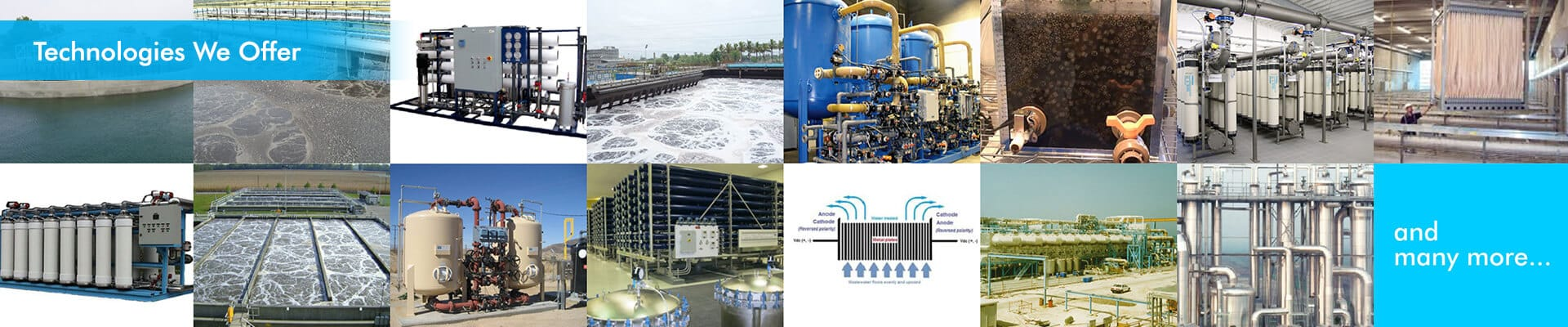
At Sauber Environmental Solutions Pvt. Ltd., we design and implement high-efficiency raw water treatment systems for municipal, industrial, and institutional applications. Our solutions address both surface water and groundwater sources, using a combination of conventional treatment processes and advanced membrane technologies to deliver safe, reliable, and regulation-compliant water.
Understanding Raw Water Sources
Surface Water Treatment Solutions
Surface water is sourced from rivers, lakes, reservoirs, canals, and ponds. Such water typically contains:
- High turbidity and suspended solids
- Organic matter and algae
- Pathogenic microorganisms
- Seasonal and quality fluctuations
Surface water treatment requires multi-stage conventional treatment to ensure consistent water quality.
Groundwater Treatment Solutions
Groundwater sources include bore wells, tube wells, and springs. While usually clear, groundwater may contain:
- Hardness (calcium & magnesium)
- Iron and manganese
- Fluoride, nitrate, arsenic
- High TDS (Total Dissolved Solids)
Groundwater treatment focuses on removal of dissolved impurities using physical, chemical, and membrane-based systems.
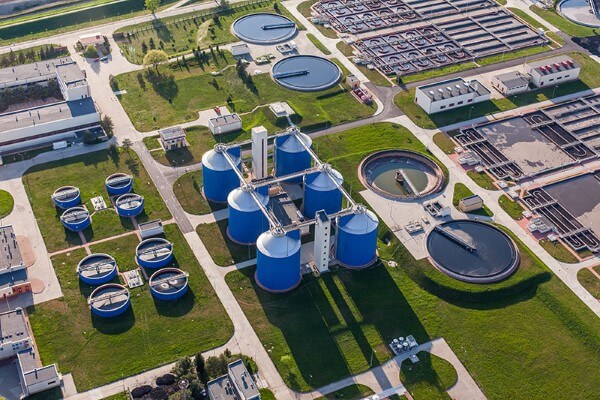
Conventional Surface Water Treatment Process
Conventional water treatment is a proven, economical, and scalable technology, widely used across the world.
Step-by-Step Surface Water Treatment Process
1. Intake & Screening
Raw water is drawn from the source through intake structures equipped with coarse and fine screens to remove floating debris and large particles.
Function:- Protects pumps and downstream equipment
- Reduces operational issues
2. Coagulation
Coagulants such as Alum, Ferric Chloride, or PAC are rapidly mixed with raw water to neutralize fine suspended particles.
Function:- Destabilizes colloidal particles
- Prepares water for floc formation
3. Flocculation
Gentle mixing allows destabilized particles to collide and form larger flocs. Polyelectrolyte flocculants may be added to enhance aggregation.
Function:- Forms settleable flocs
- Improves sedimentation efficiency
4. Sedimentation / Clarification
Water flows through clarifiers where heavy flocs settle by gravity and are removed as sludge.
Function:- Removes 70–90% suspended solids
- Reduces load on filters
5. Filtration
Clarified water passes through Rapid Sand Filters / Dual Media / Multimedia Filters to remove remaining fine particles.
Function:- Achieves high clarity
- Ensures stable treated water quality
6. Disinfection
Disinfection using chlorine, UV, or ozone eliminates pathogenic microorganisms and ensures water safety.
Function:- Protects public health
- Maintains residual disinfection in distribution
7. pH Correction & Stabilization
pH is adjusted using lime or alkali to prevent corrosion and scaling in pipelines.
Function:- Improves water stability
- Protects distribution infrastructure
Advantages of Conventional Treatment
- Low capital & operating cost
- High efficiency for turbidity & pathogens
- Proven and reliable technology
- Easy operation & maintenance
Groundwater Treatment Technologies
1. Water Softening Systems
Used to remove hardness caused by calcium and magnesium.
Technologies:- Lime-soda softening
- Ion exchange resin softeners
- Effective hardness removal
- Improves appliance and pipeline life
- Regeneration waste handling
2. Ion Exchange Resin Systems
Designed for selective removal of:
- Fluoride
- Nitrate
- Arsenic
- Iron
- High selectivity
- Very high removal efficiency
- Resin fouling
- Periodic regeneration required
3. Ultrafiltration (UF) Systems
UF membranes remove:
- Suspended solids
- Bacteria
- Colloidal particles
- Low chemical consumption
- Compact and modular
- Does not remove dissolved salts
4. Nanofiltration (NF) Systems
NF membranes partially remove:
- Hardness
- Multivalent ions
- Organic matter
- Lower pressure than RO
- Partial desalination
- Not suitable for very high TDS
5. Reverse Osmosis (RO) Systems
RO is used for complete desalination and high-purity water.
Removes:- Dissolved salts
- Heavy metals
- Nitrates, fluoride
- Organics
- Highest water quality
- Suitable for drinking & industrial use
- Higher energy cost
- Reject water management required